The instruction you have heard a hundred times in a yoga class is some version of "go deeper." Reach a little further. Fold a little lower. Get your forehead to the shin. The pose is presented as a target, and depth is presented as progress.
This article is about a different question, the one a mechanical engineer asks instead. Not "how deep." From where. Every yoga pose is, at its core, a load distribution problem. Where the load lands, where the force originates, and how it travels through the body, these are the questions that decide whether a pose helps you or hurts you. Depth is downstream.
Most yoga teachers do not teach this. Not because they do not care, but because the standard 200-hour certification does not cover the underlying anatomy and biomechanics deeply enough. This article shows what changes when the engineering layer is taught.
Joint versus muscle
The first distinction that almost no general yoga class makes is between a joint mobility problem and a muscle tension problem. To a beginner, both feel the same. The body cannot get into the shape, something is tight, the pose is hard.
But the cause matters enormously. If your forward fold is limited because your hamstrings are short, the answer is gradual loaded stretching over weeks. If it is limited because your hip joint has lost mobility (the femur cannot rotate freely in the acetabulum), no amount of hamstring stretching will help. You need to mobilise the joint itself, with movement that takes the hip through its actual range, not stretches that pull on the muscles attached to it.
A teacher who only knows poses gives the same instruction to both students, and only one improves. A teacher who understands joints looks at the body, identifies which problem they are looking at, and chooses the correct intervention. This is most of why some students plateau and others keep progressing. The plateaued ones are receiving the wrong intervention for their actual issue.
Joint mobility loss is also under-diagnosed in adults generally, especially in desk-bound bodies. Hips, thoracic spine, and shoulders are the three places this shows up most consistently. A practice that opens those joints (real joint opening, not surface muscle stretching) changes the body in ways that no amount of generic stretching ever will.
Kinetic chains
The second concept that almost never gets taught in general yoga is the kinetic chain. Bodies do not move one joint at a time. They move in linked sequences, where force generated at one end travels through a chain of joints and muscles to produce movement at the other end.
In a simple twist, the rotation does not happen "in the waist." It happens at every level of the spine simultaneously, with contributions from the hip on one side, the rib cage in the middle, and the shoulder on the other side. The teacher who cues "twist from your waist" is asking for something that is not anatomically possible. The teacher who understands the chain cues something different. Anchor the hip on one side, lengthen through the spine, lead with the shoulder on the other side, breathe into the ribcage. Same pose, different result.
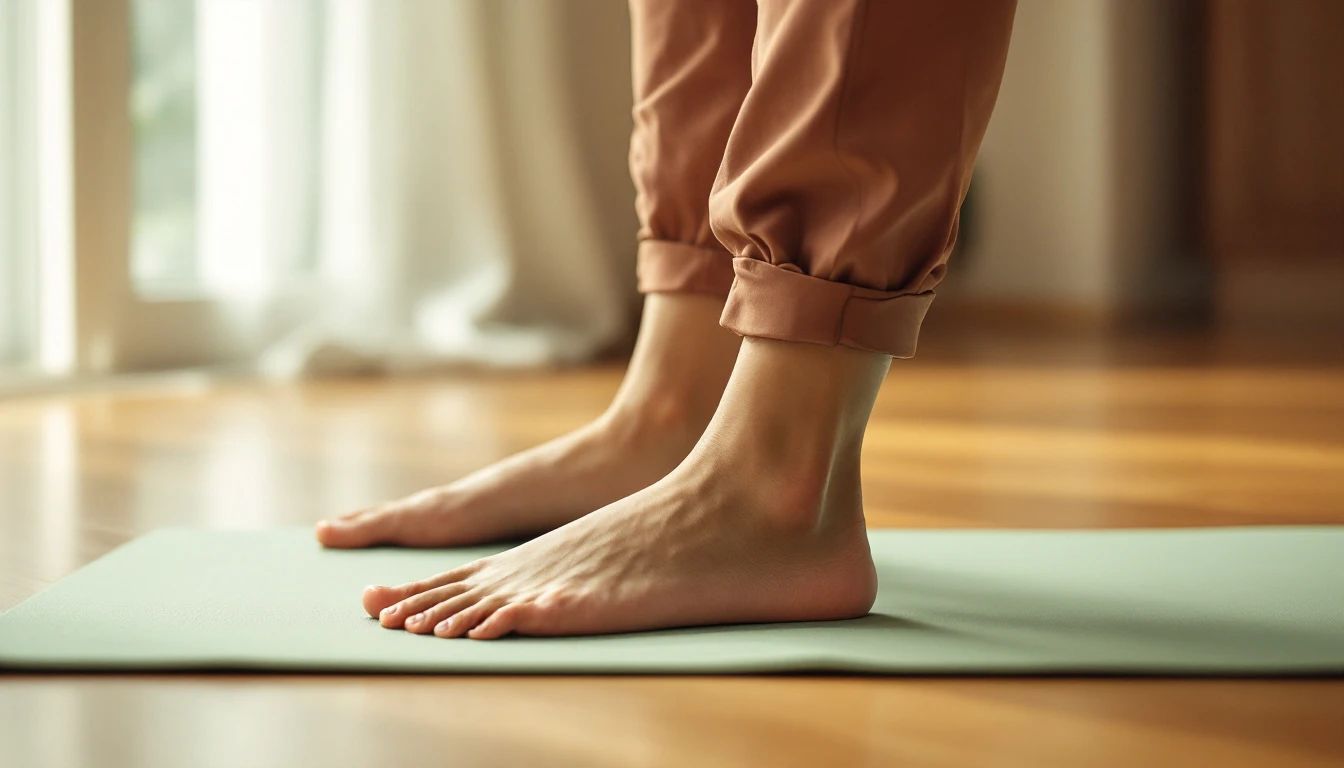
The clearest place to see kinetic chains is in standing poses. In a warrior two, the back leg is the foundation. The force from the floor travels up through the back ankle, knee, and hip into the pelvis, across the trunk, and out through the front arm. A break anywhere in the chain (collapsed back arch, lifted back heel, dropped pelvis) leaks force and produces a pose that looks roughly right but does almost no real work.
The fix is never "try harder." The fix is to identify which link in the chain is broken and address that specifically. A pose taught with chains in mind teaches the student to feel the whole sequence as one thing.
Cross-body chains matter too. The right hip and the left shoulder are linked through the diagonal lines of fascia and muscle that run across the back. A pose that lengthens one of these often loosens the other in a way direct stretching cannot. Some students with chronic right hip tightness find that working their left shoulder is what finally moves things.
Why depth is the wrong metric
Once you understand joints and chains, the "go deeper" cue starts to look strange. Deeper into what, exactly?
If a student folds further down by rounding the upper back, the depth has been bought at the cost of lumbar spine compression. The numbers (how many inches their fingertips are from the floor) improve. The underlying biomechanics get worse. Repeated over years, this is how disc problems develop in long-time yoga practitioners. Not because yoga is dangerous, but because the practice was optimised for depth instead of force distribution.
If a student goes further into a backbend by hinging at one point in the lumbar spine instead of distributing the curve across the whole spine, the same problem happens at the other end. Depth improves. Tissue damage accumulates. The student is praised for their flexibility and walks toward an injury they will not understand when it arrives.
A biomechanically aware teacher asks a different question. Not how deep, but is the load distributed correctly. Is the spine sharing the curve evenly. Are the shoulders relaxing or compensating. Is the breath staying steady. These are the actual safety questions, and they have little to do with how the pose looks from across the room.
The correct depth for any student in any pose is the depth at which the biomechanics are clean. Which varies by student, by day, by which body part is most awake. A teacher who reads load distribution can teach this. A teacher who only cues depth cannot.
What changes when the engineering layer is taught
A few specific things change, and they compound over months and years of practice.
Injuries drop sharply. Most yoga injuries are not from poses being intrinsically dangerous. They are from misallocated load over many repetitions. Once the load is allocated correctly, the same poses, done the same number of times, stop accumulating damage.
Plateaus break. Students who have not made progress in years often start moving again within weeks. Not because they got stronger or more flexible suddenly, but because the intervention finally matches what their body actually needs.
The body becomes efficient. Tasks that used to be tiring stop being tiring. Standing for an hour stops hurting. Climbing stairs stops costing as much. Carrying groceries up to the apartment stops being a workout. The body uses less energy for the same work because the work is distributed properly.
Other activities improve. Biomechanical yoga transfers to running, lifting, sports, anything physical. The frame learned on the mat applies to the body off the mat.
Awareness deepens. Students start to feel things in their own body they could not feel before. Where load is sitting. Where breath is going. Which muscles are firing. This awareness is what makes the practice self-correcting over the long term.
Why this is hard to find
Most yoga teachers do not have a background in movement science, anatomy beyond the surface level, or biomechanics in any rigorous sense. The 200-hour certification covers anatomy lightly and biomechanics not at all. A teacher who wants this depth has to go elsewhere, often through years of additional study in physiotherapy or sports science.
This is not a complaint about other yoga teachers. The industry covers a wide range of needs, and many students do well in classes that prioritise spiritual experience, community, or general fitness over biomechanical precision. If your goal is to feel calm and a little stronger, almost any class works.
But if your goal is to address chronic pain, recover from an injury, work with scoliosis, rebuild after pregnancy, or simply train your body in a way that lasts the next thirty years without wearing out, the biomechanical layer is not optional. It is the whole point.
Inner Heal Transformation is built around this layer. Every session, group or one-on-one, online or in-person, treats the body as a system being asked to distribute load intelligently. The poses are the same poses. The questions underneath them are different. That difference is what most yoga teachers do not teach, and what makes the practice actually work.