Eight hours at a desk. Two hours commuting. Two hours of phone scrolling at night. The body is shaped by what it spends most of its time doing, and what most office bodies spend most of their time doing is folding forward.
The result, by Wednesday afternoon, is the back pain you have learned to ignore. By Friday, the shoulders that will not release. By month four of a new job, the neck that clicks when you turn your head.
What sitting actually does
The damage is not from sitting itself. It is from sitting in a flexed position for hours and never reversing it. The hip flexors shorten. The thoracic spine, the upper-mid back, loses its natural extension. The shoulders round forward. The neck pokes ahead to compensate. After enough months and years, the body forgets there is another shape.
Standing desks help a little. Ergonomic chairs help a little. What helps more is showing the body what the opposite of all-day sitting looks like, regularly enough that it stays available.
Five stretches that actually undo it
These take ten minutes. None of them require equipment. Do them in the order listed, hold each for five slow breaths.
One. Standing chest opener
Stand in a doorway. Place your forearms on either side of the frame at shoulder height. Step one foot forward. Lean forward gently until you feel a stretch across the front of the chest and shoulders. This opens what eight hours of typing has closed.
Two. Cat-cow at the desk
Sit at the edge of your chair, feet flat. On the inhale, arch the back, look up slightly. On the exhale, round the back, drop the chin. Do five rounds slowly. This wakes up every segment of the spine.
Three. Seated twist
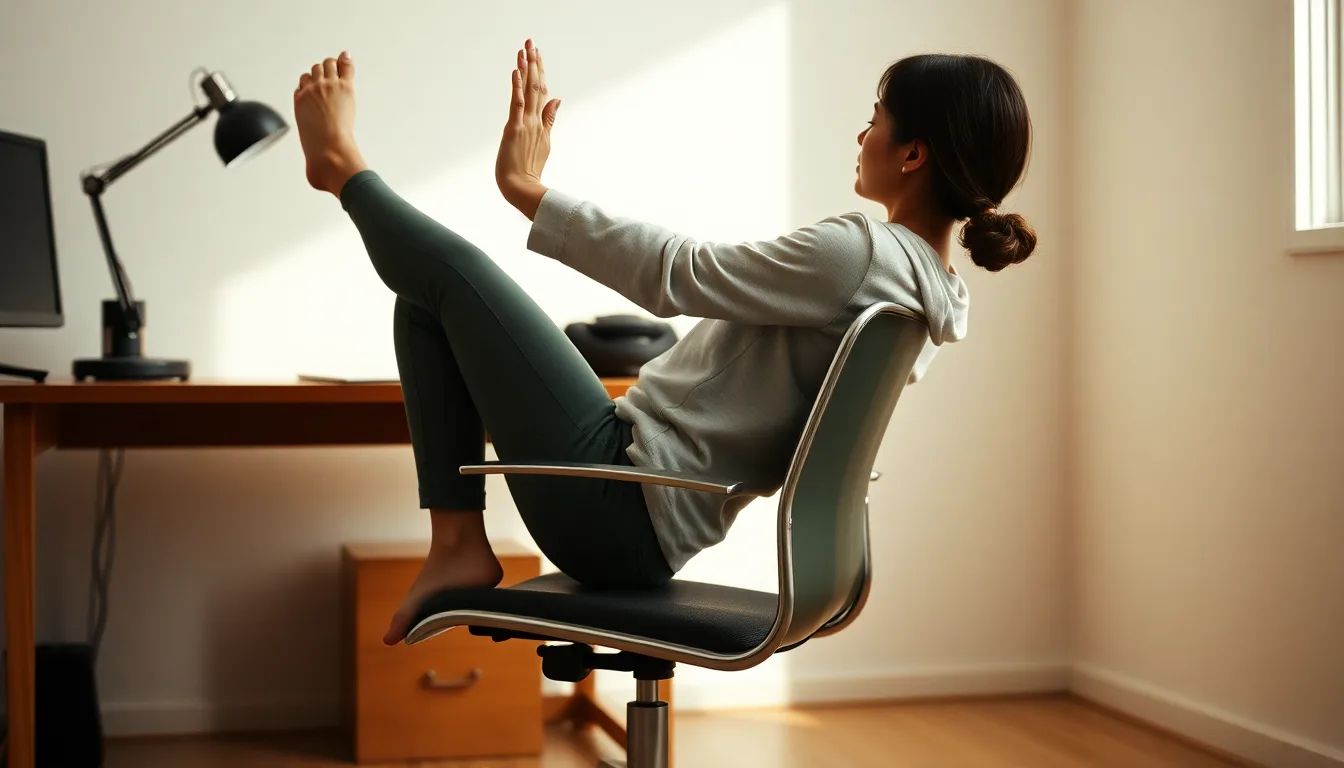
Stay seated. Place your right hand on the outside of your left knee, left hand behind you for support. Inhale to lengthen the spine, exhale to twist gently to the left. Five breaths. Repeat the other side. This rotates the spine, which sitting never does.
Four. Standing forward fold with bent knees
Stand up. Soften the knees generously. Fold forward, letting the head hang heavy, hands wherever they reach. The point is not to touch the floor. The point is to let gravity decompress the spine. Stay for five breaths.
Five. Wall hip flexor stretch
Find a wall. Step the right foot back into a lunge. Press the right hip forward gently while keeping the torso upright. Five breaths. Switch sides. This is the antidote to the shortened hip flexors that sitting creates.
When to do them
Mid-afternoon is the sweet spot. The body has accumulated about six hours of compression. Ten minutes of opening before the late afternoon slump means the back has a chance to reset before another four hours of work.
The students who report the biggest change are not the ones who do these every day. They are the ones who do them every workday, for a few months in a row. Consistency over intensity is the whole game.
If your back has been telling you something for a while and you have ignored it, these are the entry point. They will not fix structural issues alone, but they will keep the easy stuff from becoming the hard stuff.
These sequences work once they become routine rather than occasional. The first month is unlimited at SGD 196, which is long enough to know whether it is helping.