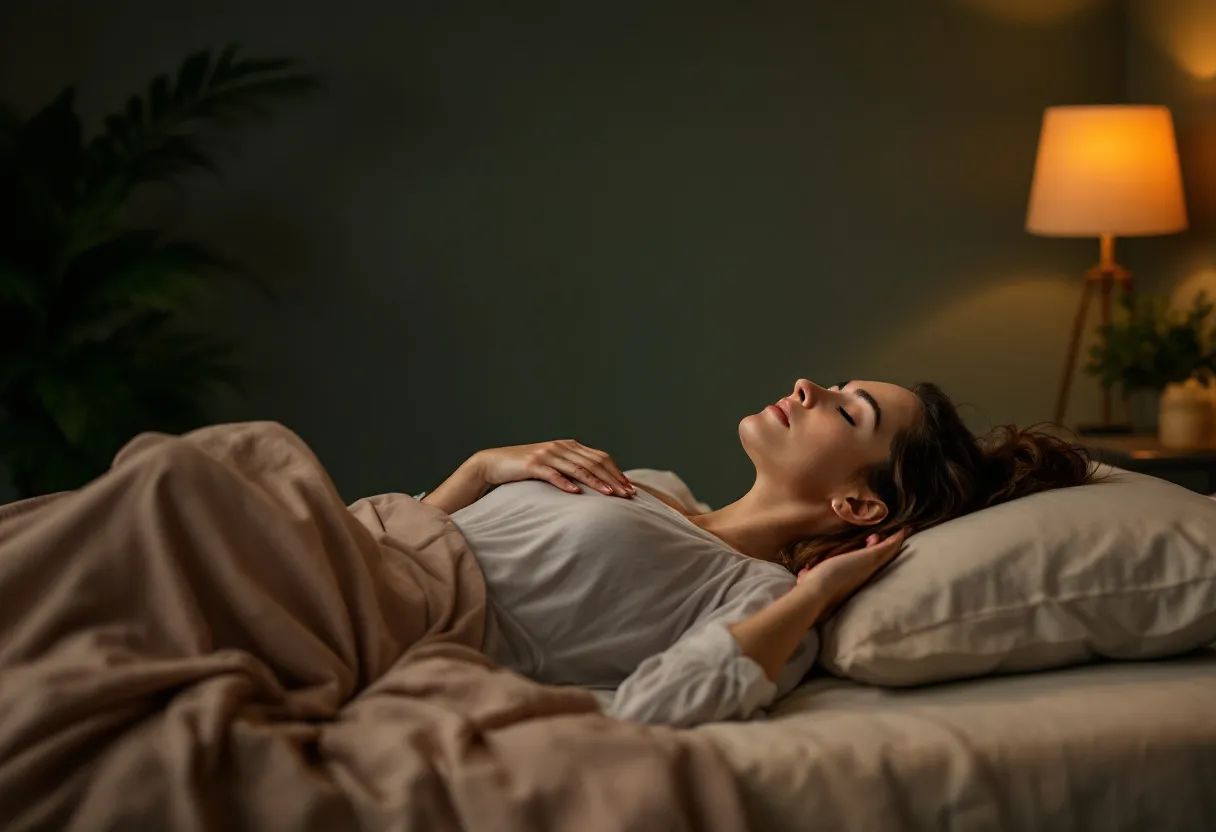
12:47am, and you have read the same paragraph of the same book four times without absorbing a word of it. The room is dark, the phone is face down on the nightstand where you put it an hour ago on principle. Your body is exactly as tired as it was at 10pm, but nothing about your mind agrees that it is time to stop. This is not a willpower problem, and it is not a sign you have forgotten how to relax. It is what an autonomic nervous system stuck in its alert setting looks like from the inside.
This piece explains the actual mechanism a yoga practice uses to help with that, not a list of poses. It covers what a slow evening sequence measurably does to the nervous system, and what the research says it can and cannot do for sleep. It also names the point at which the honest answer is to see a doctor rather than add another stretch.
The short version. Sleep depends on the autonomic nervous system shifting from its sympathetic, alert setting to its parasympathetic, rest setting. Slow, exhale-led breathing is one of the more reliable ways to nudge that shift on purpose, and the research on yoga backs a real effect on subjective sleep quality. It does not reliably reduce insomnia severity on its own, and it is not a treatment for a diagnosed insomnia disorder or sleep apnoea. Those need cognitive behavioural therapy or a medical assessment, not a longer hold in child's pose.
This is one piece of Inner Heal Transformation's therapeutic yoga for pain relief guide, focused specifically on what happens in the nervous system once the lights go out and the body still will not stand down.
What is actually happening in your nervous system at midnight
The autonomic nervous system runs the body's background systems, heart rate and hormone release among them, without any conscious input, and it operates through two branches working like an accelerator and a brake. The sympathetic branch is the accelerator. It raises heart rate and readies the muscles and hormones to meet a demand, useful in a meeting or a deadline, unhelpful at 11pm. The parasympathetic branch is the brake. It lowers heart rate and allows the hormonal shifts that let sleep actually begin.
Cortisol is part of what keeps the accelerator engaged. It normally follows its own daily rhythm, high in the morning and tapering by evening, but a late stressful email or an unresolved worry about tomorrow can push a fresh spike into the hours when it should be falling. The nervous system does not distinguish a genuine threat from a looping thought about a meeting. Both read as reasons to keep the accelerator down.
A stressful day and a bright screen an hour before bed are often enough on their own to leave the accelerator engaged well past the point where it is doing anything useful. The body is not broken in that state. It is running exactly the pattern a long day of low-grade demand wrote into it. The problem is rarely that the mind refuses to switch off. It is that nothing has told the nervous system it is safe to.
A body that spent the day locked into the same forward-leaning desk posture often carries some of that same sympathetic charge straight into the evening, which is one reason desk-driven neck and shoulder tension shows up as a restless night almost as often as an aching shoulder.
Why the exhale is the lever yoga actually pulls
Yoga does not talk the nervous system down with an idea. It changes a physical input the autonomic system is built to respond to, and the clearest one available to a conscious mind is the breath. Breathing is unusual among bodily functions because it runs automatically but can also be taken over on purpose, which makes it one of the only direct dials into an otherwise involuntary system.
A 2017 review in the journal Breathe, published by the European Respiratory Society, laid out the specific mechanism. Slowing the breath rate and lengthening the exhale relative to the inhale increases heart rate variability and baroreflex sensitivity, both markers of a nervous system shifting its balance toward the parasympathetic branch. In plain terms, a longer exhale is read by the body as evidence that the moment is calm enough to stand the accelerator down.
The reverse is just as informative. A short, shallow breath, the kind that shows up automatically under stress, keeps that same balance tilted toward the accelerator, which is why trying to fall asleep by gritting your teeth and lying very still rarely works. The breath pattern is still running the alert programme even while the rest of the body holds motionless.
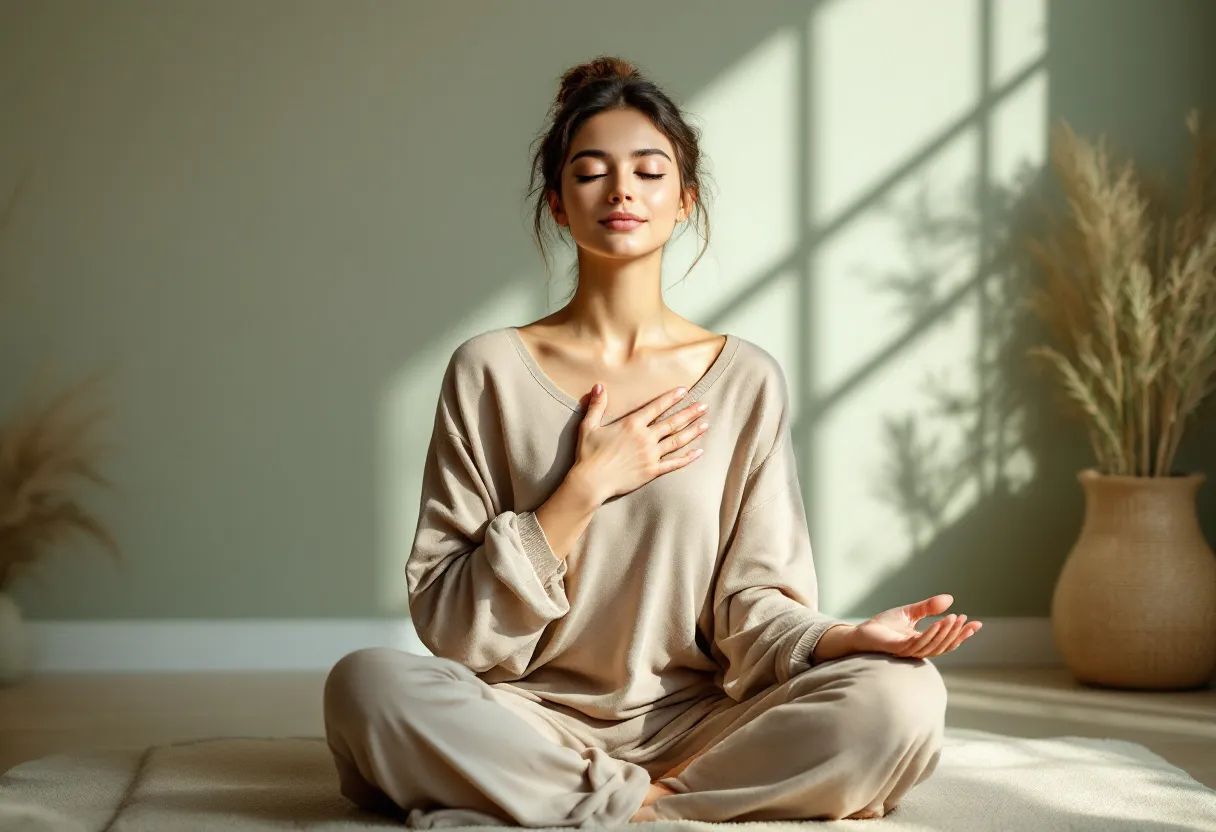
This is the actual content of a slow evening yoga practice. Held positions paired with an exhale that runs longer than the inhale, four counts in and six counts out is a common starting ratio, are not a distraction technique. They are a direct, repeated physiological signal, given often enough in one sitting that the nervous system starts to act on it.
What yoga can realistically do for sleep
The strongest evidence for yoga and sleep comes from a 2020 systematic review and meta-analysis in BMC Psychiatry, which pooled 19 randomised controlled trials across 1,832 participants. Sixteen of those trials, measuring sleep quality with the Pittsburgh Sleep Quality Index, found a meaningful improvement from yoga compared with a control group.
That is a genuine, replicated effect on how rested and settled sleep feels, not a single small study standing alone. Similar findings turn up in older adults and in women going through menopause, cited by the NIH's National Center for Complementary and Integrative Health as reasonably consistent evidence that yoga can support subjective sleep quality.
What yoga cannot do for sleep
The same 2020 meta-analysis is just as informative for what it did not find. Three of the pooled trials measured insomnia severity directly, using the Insomnia Severity Index, and found no statistically significant reduction from yoga. Improving how rested sleep feels and reducing a diagnosed insomnia disorder are not the same outcome, and the evidence currently separates them even where marketing does not.
The NIH's NCCIH is direct about this distinction, noting that yoga may help sleep quality without being established as a treatment for insomnia itself, and that the approach most strongly recommended for a diagnosed insomnia disorder remains multicomponent cognitive behavioural therapy, known as CBT-I. Guidance last updated May 2024.
The American College of Physicians reached the same conclusion in a 2016 clinical guideline, recommending CBT-I as the first-line treatment for chronic insomnia in adults on a strong grade of evidence, ahead of any complementary approach including yoga.
None of this makes an evening practice pointless. It means the honest claim is narrower than the ones sold online. A slow practice can help the nervous system downshift on an ordinary restless night. It is not a substitute for CBT-I once sleeplessness has become a diagnosed disorder, and it cannot diagnose or treat sleep apnoea, a physical airway problem no stretch reaches.
When to see a doctor before an evening practice
Most restless nights are safe to work with directly. A specific set of signs means a doctor should look first, before any breathing sequence.
See a doctor if loud snoring is paired with breathing that stops and starts during sleep, or with gasping or choking sounds, which the NHS lists as signs of sleep apnoea worth a GP assessment. Sleep apnoea is a physical airway problem, and it can be serious if it goes undiagnosed. That guidance was last reviewed in May 2026.
See a doctor too if poor sleep has run for three months or more, which the NHS classifies as long-term insomnia rather than an ordinary rough patch, or if changing your sleep habits has not helped and it is affecting your ability to function during the day. That page was last reviewed in March 2024, and its own next step for long-term insomnia is often cognitive behavioural therapy, not a longer practice.
If you are unsure whether your pattern belongs in that category, the broader guide to when yoga is not enough sets out the same reasoning for pain and injury, and the same logic applies here.
A short practice built on the mechanism
The sequence below runs entirely on the exhale-led mechanism above, not on any single pose being special. Anything that lets you hold a comfortable position while breathing slowly, exhale longer than inhale, does the same job.
Why one good night does not undo the pattern
A single evening practice can genuinely help you fall asleep faster on the night you do it. What it will not do is undo months of a nervous system trained to stay on alert in one sitting, any more than one good rubdown undoes months of a joint that has stopped moving properly.
That is the same reason massage relief keeps wearing off for a tight shoulder. A passive or one-off intervention can lower the volume for an evening. What holds the change is repeating it consistently enough that the nervous system, or the joint, recalibrates its baseline instead of resetting again by morning.
In practice this means the sequence works best done most evenings for a few weeks, not saved for the nights insomnia already has a grip. A nervous system that gets the same slow-exhale signal at roughly the same time each night starts to treat it as a reliable cue, the way it already treats a dimming sky or a familiar bedtime routine, rather than a special event it has to be persuaded into.
Sleeplessness tangled up with a back or neck that will not let you get comfortable is a slightly different problem, worth sorting on its own terms first. If pain is the reason you cannot settle, deciding between yoga, physiotherapy and a doctor's assessment for that pain comes before any breathing ratio, because no exhale count fixes a joint that is genuinely inflamed or compressed.
How Inner Heal approaches an evening practice
Dr. Jacqueline Yun holds a PhD in Mechanical Engineering from NTU and teaches therapeutic yoga that treats the nervous system the way she would treat any system under sustained load, by asking what input actually changes its behaviour rather than what merely feels soothing in the moment. An evening sequence built around the breath ratio above is one of the more consistent tools she works through with students whose main complaint is a mind that will not stop at bedtime.
It will not replace a sleep specialist if what you are dealing with is a diagnosed insomnia disorder or sleep apnoea, and it says so plainly rather than promising otherwise.
If your pattern is the ordinary racing-mind kind rather than one of the signs above, start your first month with Inner Heal for SGD 196 and bring an evening practice to the part of the day that has been hardest to switch off.
| Step | Practice | What it signals to the nervous system | Roughly how long |
|---|---|---|---|
| 1. Seated breath count | Sit comfortably. Inhale for a count of four, exhale for a count of six. | Establishes the longer-exhale ratio the rest of the sequence runs on. | 1 to 2 minutes |
| 2. Slow seated forward fold | Fold forward from the hips over crossed or extended legs, no force, same 4-6 breath. | An inward-facing shape that tends to quiet visual and mental input. | 1 to 2 minutes |
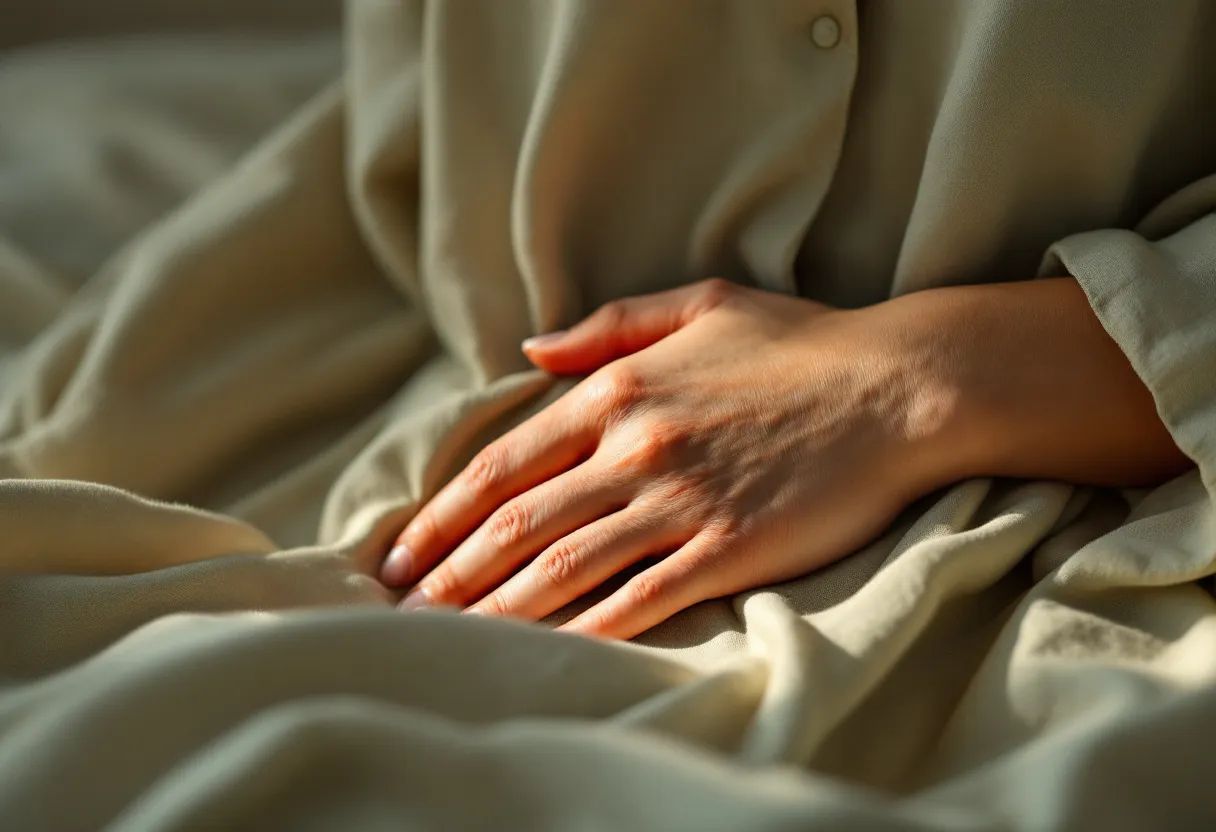
| 3. Reclined butterfly | Lie back, soles of the feet together, knees supported, hands resting on the belly. | Feeling the belly rise and fall reinforces a slow diaphragmatic breath over a shallow chest breath. | 2 to 3 minutes |
| 4. Supine twist, each side | Knees drop to one side, gaze turns the other way, breath stays slow. | A gentle twist paired with a long exhale eases residual tension without raising heart rate. | 1 minute per side |
| 5. Legs up the wall | Hips near a wall, legs resting up it, arms open. | A passive position that needs no muscular effort to hold, itself part of the safety signal. | 3 to 5 minutes |
Common questions
Does yoga help you fall asleep faster?
For many people, yes, on the night they do it. A slow practice with an exhale longer than the inhale measurably shifts the nervous system toward its rest setting, and the sleep-quality research backs a real, moderate effect on top of that. It tends to work best as a wind-down ritual close to bedtime rather than a one-off session done weeks apart.
Can yoga cure insomnia?
No. A 2020 meta-analysis of 19 randomised trials found yoga improved subjective sleep quality but did not significantly reduce insomnia severity scores in the trials that measured it directly. Cognitive behavioural therapy for insomnia, CBT-I, is the treatment recommended as first-line by the American College of Physicians and the NIH's NCCIH for a diagnosed insomnia disorder.
What is the best breathing pattern for sleep?
Any ratio where the exhale runs longer than the inhale works on the same mechanism. A common starting point is inhaling for a count of four and exhaling for a count of six. The exact numbers matter less than the exhale consistently outlasting the inhale, since that relationship is what the research links to increased vagal tone.
How long before an evening practice affects sleep?
The nervous-system effect of a single slow session can be felt the same night. A durable change to how easily you settle most nights tends to take consistent practice over several weeks, roughly the timeline used in the clinical trials behind the sleep-quality research.
Should I try yoga instead of seeing a doctor about sleep apnoea?
No. Sleep apnoea is a physical airway problem, and the NHS lists breathing that repeatedly stops and starts during sleep, or unusual gasping and choking sounds, as reasons to see a GP for assessment. No breathing exercise or pose reaches the underlying airway mechanism, and treating suspected apnoea with yoga alone risks leaving a serious condition unmanaged.