Online yoga classes are just as effective as in-person classes for improving posture and reducing pain. For adults working around a packed schedule, they are considerably easier to keep up with, and sustained practice is what actually produces results.
If you have been putting yoga off because there is no time to commute to a studio, this is worth the next five minutes.
Is online yoga actually as good as in-person?
Two doubts come up most often: will you learn properly without a teacher physically in the room, and are you going to be watching a video and guessing your way through poses?
Both are worth taking seriously.
A 2024 randomised clinical trial published in JAMA Network Open enrolled adults with chronic low back pain in 12 weeks of live virtual yoga. Compared to a wait-list group, participants saw significant improvements in pain intensity, back function, and sleep quality. Not pre-recorded video yoga. Live, streamed classes with a real teacher running each session in real time.
The distinction matters. There is a meaningful difference between pressing play on a yoga video and joining a live class where the teacher can see you, read the room, and correct what she sees as the session unfolds. The latter is what Inner Heal Transformation runs.
Will the teacher actually see and correct me?
Yes, with one honest caveat.
In a small live group class on Zoom, the teacher can see your camera feed the same way a studio teacher scans a room. When your hips are hiking up in warrior pose, or your lower back is rounding in a forward fold, those things are visible on camera. Jacqueline watches for exactly this: the compensations that feel fine until they accumulate into a problem.
What is different from in-person is touch. A studio teacher can place a hand on your shoulder blade to show you where to draw it, or press a palm against your lower back to signal where the extension should originate. Online, corrections travel through words and demonstration instead. That is a real difference, and it is worth naming plainly.
For most alignment work, verbal and visual cueing is enough to make meaningful progress. The gap shows most in hands-on adjustments for specific structural conditions. If that describes your situation, a 1-on-1 session, available online or in person in Singapore, is a better fit than a group class regardless of format.
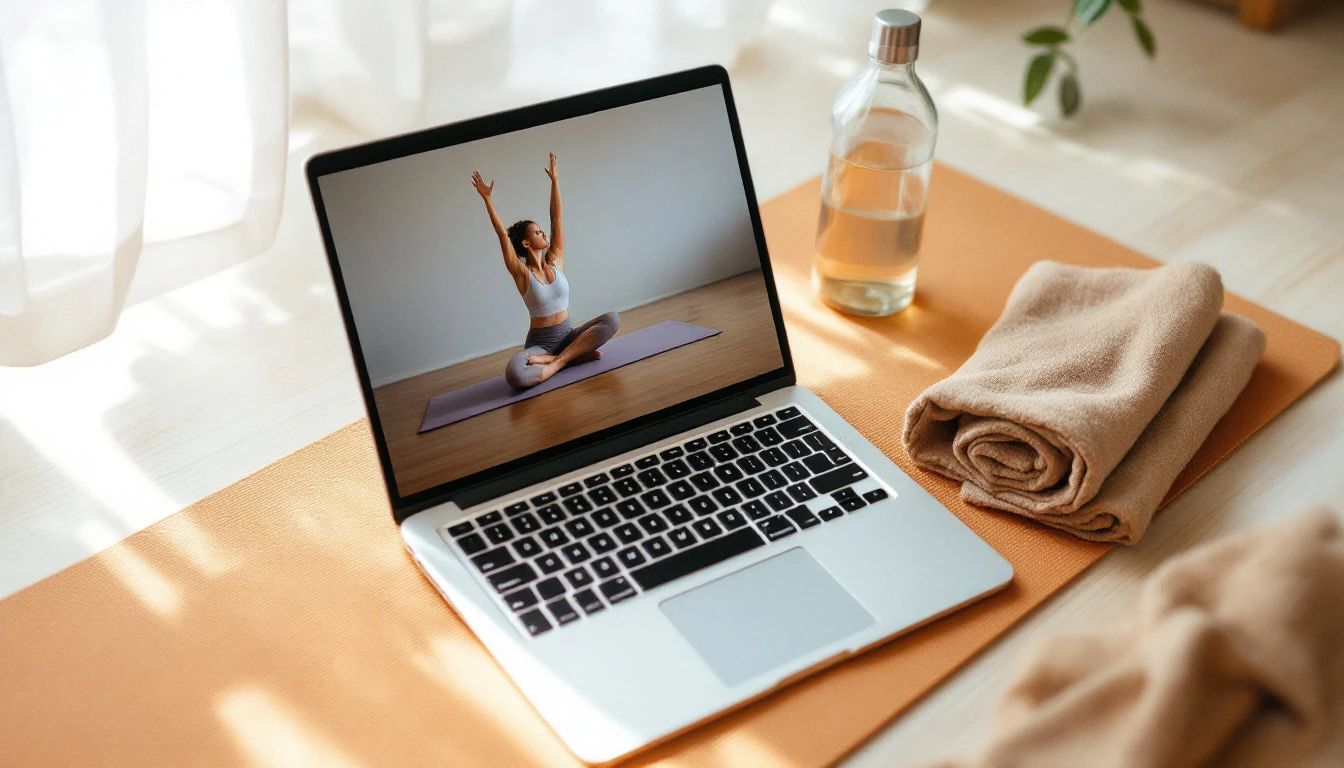
Do I need equipment or a large space?
No and no.
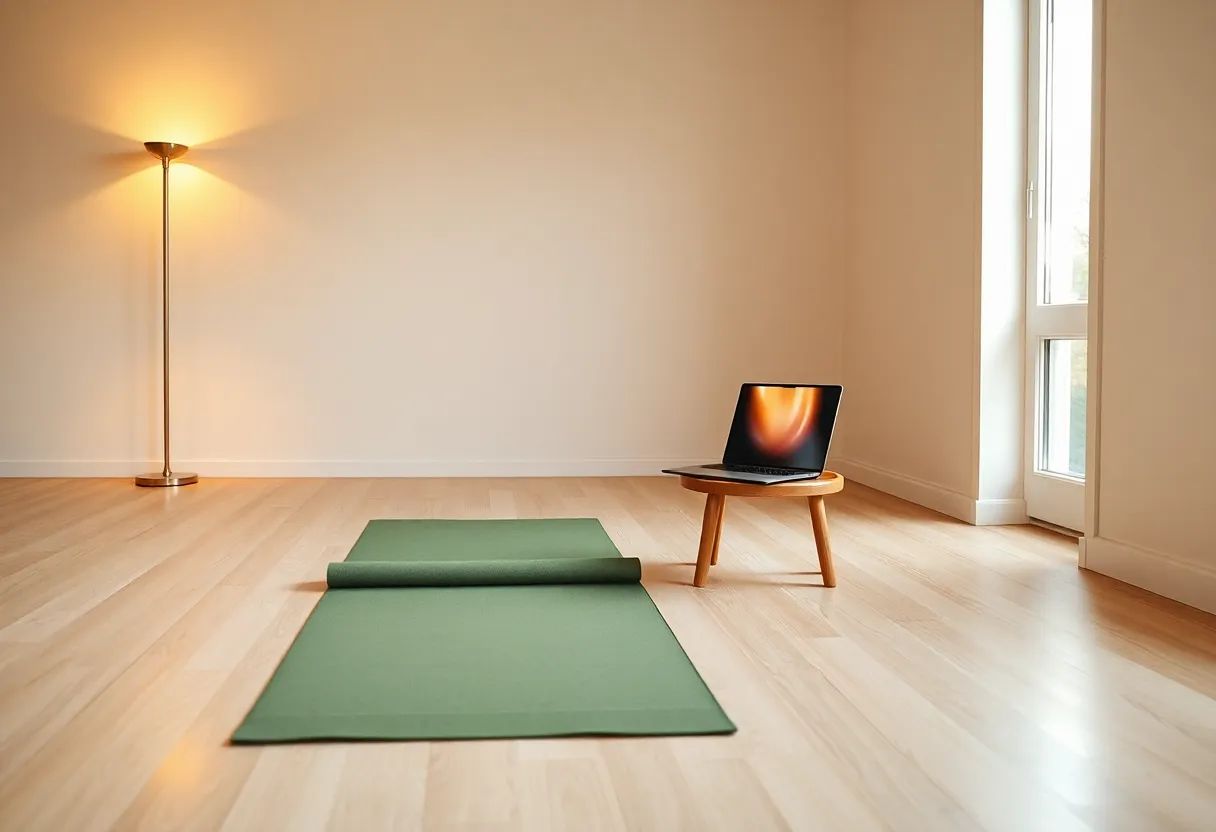
A yoga mat. A clear floor patch roughly 2 metres by 1 metre. The classes are built around what people actually have at home: a living room corner, a bedroom with the furniture shifted slightly, a hotel room on a work trip. Blocks and a strap are helpful for certain poses but are not required to start.
What in-person yoga still does better
Before making the case for online, it is worth being clear about where the studio experience holds a genuine edge.
The tactile element is the clearest gap, as described above. Beyond that, sharing physical space with other practitioners has a quality online does not fully replicate: the ambient awareness of others moving through the same poses, the natural entrainment of breath in a room. Some people find that easier to settle into than a Zoom grid.
If you live close to a good studio, your schedule is genuinely predictable, and in-person classes work logistically for you, going in person is a real option worth considering. The argument for online is not that it is better in every dimension. It is that it fits the actual shape of most working adults' lives in a way that studios do not.
The real case for online: consistency
Results in yoga come from showing up regularly, not from occasional exceptional sessions.
This is not a motivational claim. It is how the body adapts: through repeated, regular practice that signals change over time. A solid class twice a week builds different results than a brilliant class once every few weeks when you manage to get there.
And this is where the studio model tends to break down for most busy adults.
Commuting 30 to 45 minutes each way works when your schedule is predictable. When a meeting runs late, when your child is sick, when you are travelling for three days, the studio slot gets skipped. Then another one. Then it has been three weeks and starting again feels harder than it did before.
Online, you join from wherever you are. The class starts at the scheduled time with a real teacher and other students present. You finish the session in the same hour you would have spent travelling to and from a studio. For a parent at home after the kids are in bed, or a professional who travels regularly, that reduction in friction is what makes a consistent practice actually possible.
Will I actually show up?
This is the most honest objection. The flexibility of online can genuinely become the reason to skip.
A few things work against that tendency. Scheduled live classes carry real commitment in a way a recorded library does not. When the class starts at 7pm on Tuesday with Jacqueline running it and other students attending, you are joining a live event, not deferring to a playlist. That structure matters.
A defined first month also gives you a container: 30 days to show up often enough to feel what actually changes. After a few weeks of regular practice, most people notice things that matter: a shoulder that stopped locking up, a back that moves with less resistance in the morning. That experience is what builds the habit, not deciding in advance that you will be disciplined about it.
Starting the first month
The first-month trial at Inner Heal gives you unlimited live online group classes for 30 days at SGD 196. Enough time to show up consistently and feel the difference.
You do not need to commit beyond the first month. You just need to begin.