Some nights the body is ready for sleep but the mind has other plans. You lie down and the day replays itself, the to do list grows, and the harder you try to sleep the further it drifts away. If that sounds familiar, a short, calming practice in the half hour before bed can give your body a clear signal that the day is over.
This is not a workout. It is slow movement and slower breathing that nudge the nervous system out of go mode and into rest.
Does yoga actually help you sleep?
Your nervous system has two broad gears. One readies you for effort and alertness. The other handles rest, digestion, and repair. A busy day, bright screens, and a turning mind keep you stuck in the first gear long after you have stopped needing it.
Slow, gentle yoga helps shift you into the second gear, mostly through the breath. When your exhale is longer than your inhale, you gently encourage the body's own braking system, the one that slows the heart and softens tension. Add some quiet forward folds and easy positions held with calm breathing, and the body starts to read the signals it needs: you are safe, nothing is urgent, you can let go.
Set the scene first
Movement works better when the room agrees with it. Dim the lights an hour before bed so your body can produce the hormones that bring on sleep. Put screens away, or at least down, since their light tells the brain it is still daytime. Keep the room cool. None of this is fancy, and all of it helps the practice below land more deeply.

A short evening sequence
Give this around ten minutes. Move slowly, keep the lights low, and let each exhale run a little longer than each inhale. There is no need to push into any stretch.
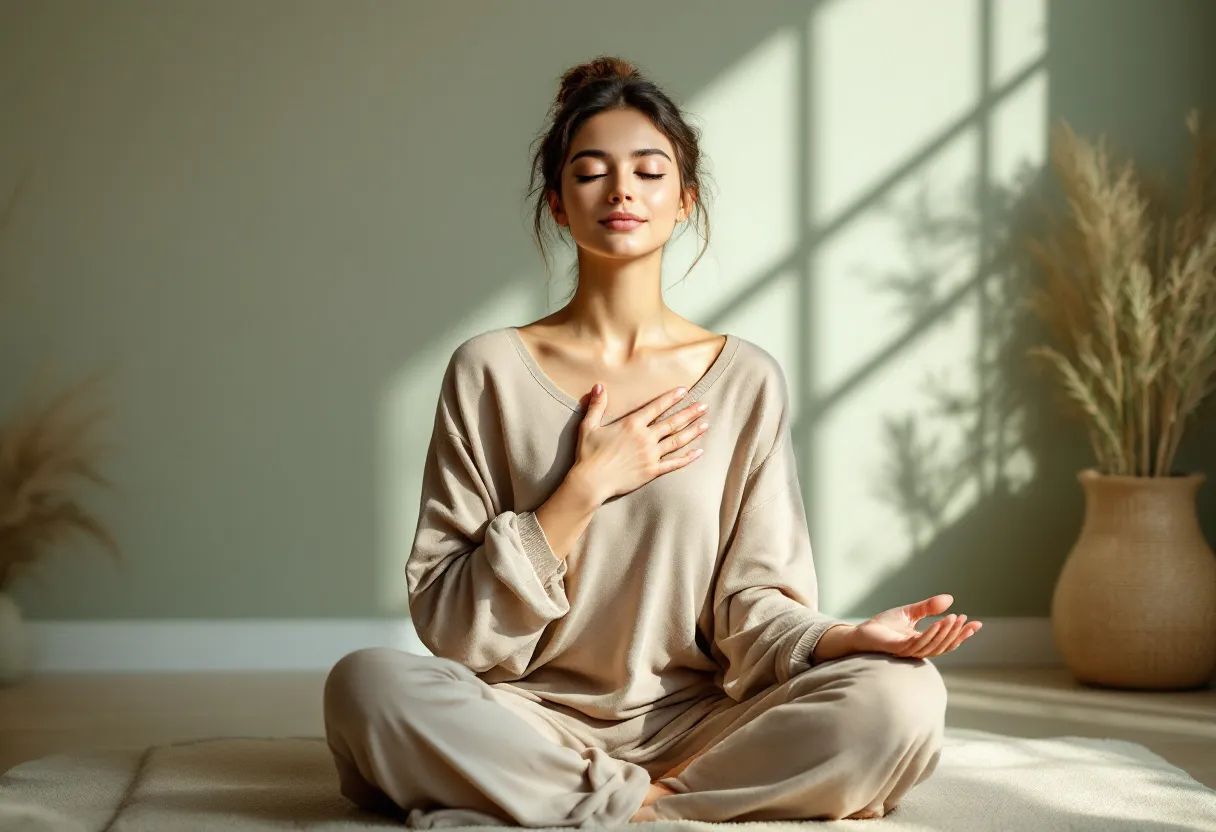
Slow seated breathing
Sit comfortably. Breathe in for a count of four, then out for a count of six. Let the longer exhale do the work. Stay here for a minute or two and let the pace of everything come down.
Gentle seated forward fold
Sit with your legs out in front and fold forward only as far as is comfortable, resting your hands on your shins or a cushion on your thighs. Let the head be heavy. Breathe here for a minute. Forward folds turn attention inward and quieten the mind.
Reclined butterfly
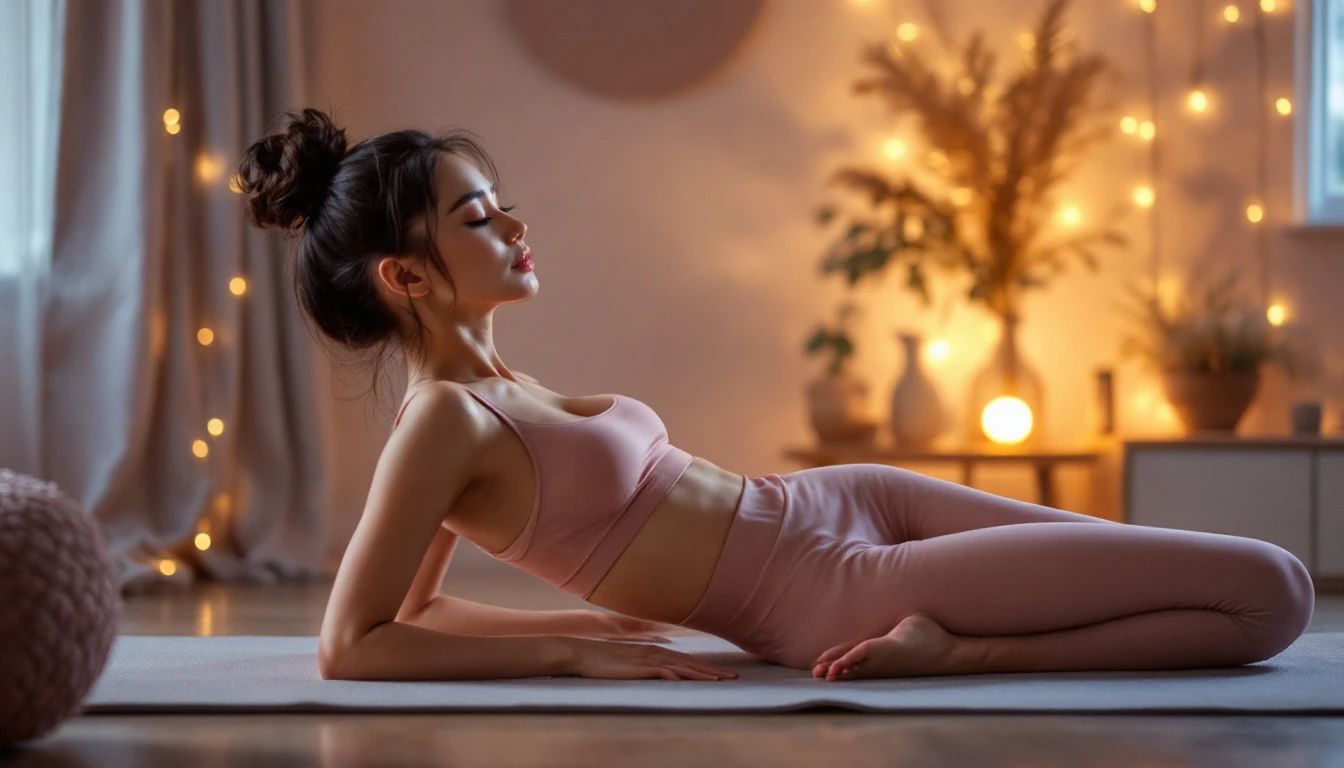
Lie back, bring the soles of your feet together, and let the knees fall open, with cushions under the knees if that feels better. Rest your hands on your belly and feel it rise and fall. Stay for two minutes.
Supine twist
Lie on your back, draw both knees to one side, and turn your gaze the other way. This releases the lower back after a long day. One minute on each side.
Legs up the wall
Sit side on to a wall, then swing your legs up it as you lie back. Let your arms rest open. This quiet position eases tired legs and is deeply settling. Stay for three to five minutes.
When you are done, move gently to bed rather than springing up, and keep the lights low.
If sleep still will not come
A wind down practice helps most people most of the time, but it is not a cure for everything. If you regularly struggle to fall asleep or stay asleep, feel exhausted through the day, or suspect something like sleep apnoea, please speak to a doctor. Yoga sits alongside good medical care, not in place of it. And on any single restless night, try not to force it. If you are still awake after a while, get up, keep the lights low, and take a few slow breaths before lying down again.
A calmer end to the day, from home
The beauty of an evening practice is that it belongs at home, in soft light, at your own pace. There is nowhere to go and nothing to perform. If you would like company and a calm voice to follow as you settle, Inner Heal runs gentle live online classes you can join from your bedroom, with no studio and no commute. Done most evenings, even for a few minutes, this kind of practice becomes a signal your body learns to trust: the day is done, and rest is allowed.