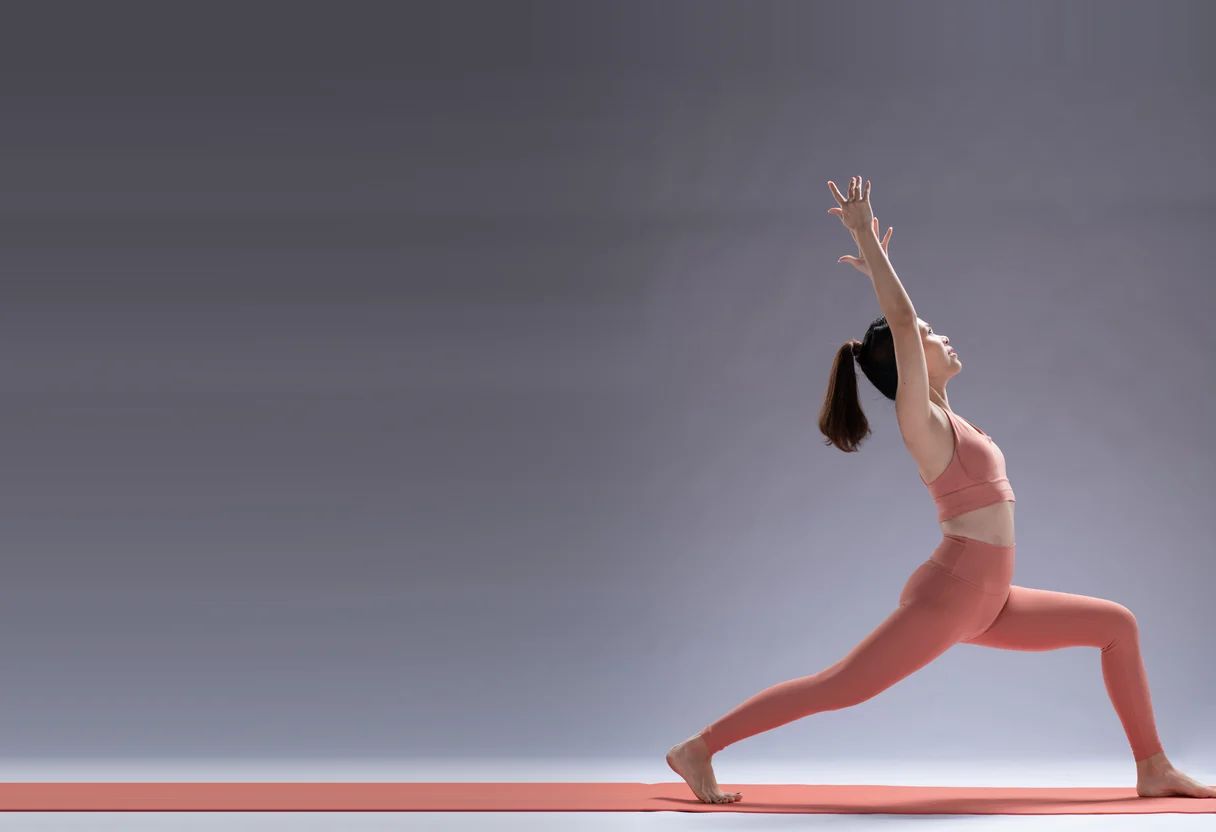
Halfway through a Zoom class, a student lifts her back knee into crescent lunge and I watch her low back do all the work. Her ribs push forward and her shoulders creep toward her ears. By the second breath she is holding the pose instead of breathing in it. She is not weak. She is using the wrong part of her body to do a job that belongs somewhere else.
Crescent lunge gets taught as a backbend, so most people try to produce a backbend, arching wherever the spine will let them, which is almost always the low back. The pose is actually a hip and chest opener with a backbend riding on top of it. Fix the order and the low back stops paying for it.
What crescent lunge is actually training
Anjaneyasana, the low lunge with the torso lifted and the arms reaching overhead, opens the chest cavity by extending the upper spine. It also asks for real hip extension in the back leg, not borrowed movement from the low back. Both legs are meant to hold weight the whole time, the front one bent and the back one straight and active.
Most people only feel the third part, the legs working, because the first two parts are being skipped. When the back hip cannot extend, the body has to find that range from somewhere, and the somewhere is almost always the lumbar spine. The chest never really opens. The low back arches instead, and calls it done.
Why the low back takes over
Every hip joint has a front line, the hip flexors, that shortens after hours in a chair. The iliopsoas, the deepest of that group, runs from the lower spine and pelvis to the top of the thigh, and it is built to stay short while you sit. Ask that same hip to extend behind you in a lunge, the exact opposite of sitting, and a tight iliopsoas simply will not let the thigh travel that far back.
The pelvis tips forward to compensate. The low back arches to finish the range the hip would not give. From the outside, the ribs push forward and the whole shape still reads as a backbend.
The wrong version, and what it is protecting you from
The wrong version has a familiar shape. Ribs push forward and shoulders climb toward the ears. The low back grips tight enough to feel like real effort, which is exactly why it is easy to mistake for progress.
None of that is a character flaw. A body that cannot find range in the hip will always find it somewhere else, and the lumbar spine is an easy joint to borrow from because it already moves in every direction. The cost shows up later, usually as the familiar ache that appears after a class rather than during one.
What changes when the hip does its job
The right version starts at the back foot, not the chest.
1. Press the back foot down first
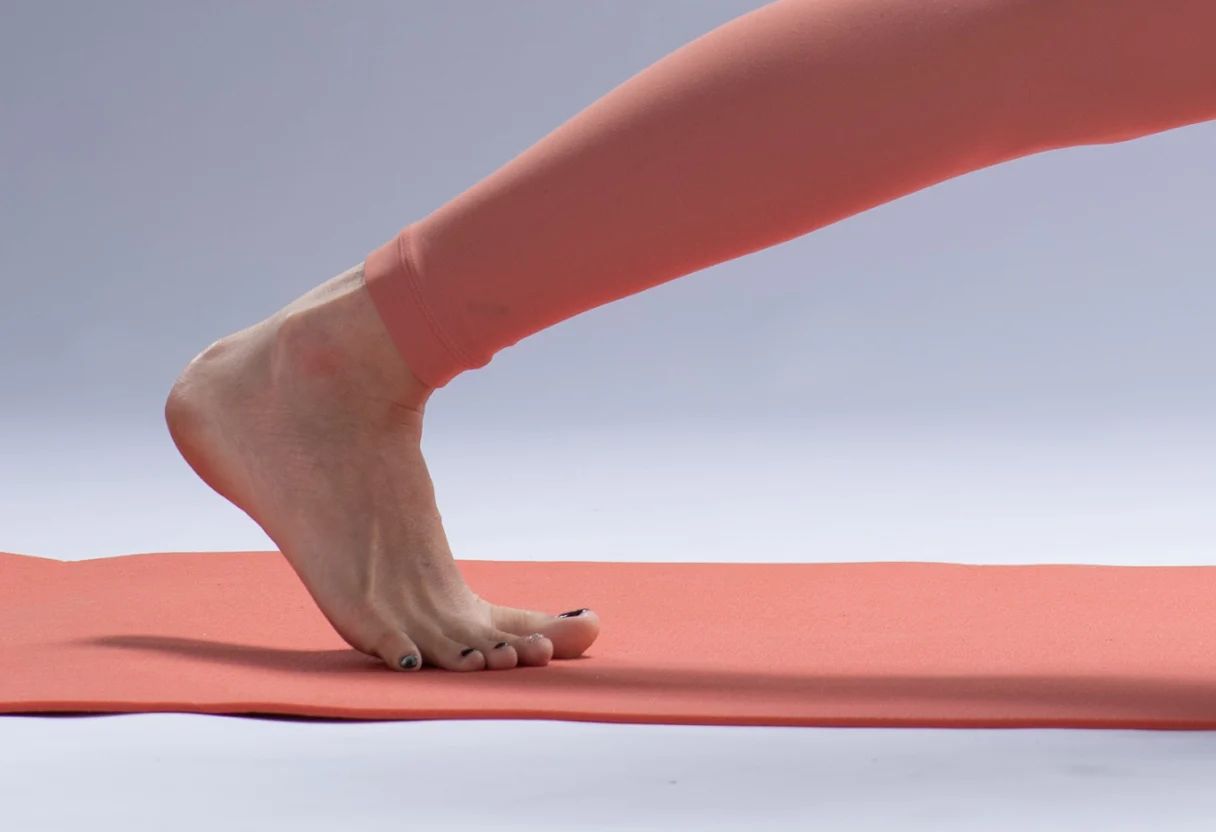
Before anything else, press the ball of the back foot into the floor and draw the inner thigh forward and slightly up. This alone starts to switch on the muscles that let the hip extend, instead of the low back.
2. Find the glute before the backbend
Let the glute on the back leg engage before you reach the chest up or back. A hip that is actively extending, with the glute doing real work, gives the spine somewhere honest to arch from later, if it arches at all.
3. Let the chest open last, not first
Once the back hip is doing its job, let the chest lift as a result of that, not as a separate effort. If the ribs are still pushing forward at this point, the hip has not found its range yet, and the backbend is happening in the low back again.
Why this matters past the lunge
A tight hip flexor from a desk job does not stay contained to lunges. The same shortened iliopsoas that steals range in crescent lunge is often the same one tipping the pelvis forward all day, a pattern covered in more depth in why hips get tight from a day of sitting. Crescent lunge is just the moment it becomes visible enough to actually correct.
This is also why depth is the wrong thing to chase in this pose, or in most poses. The real question is not how far the chest reaches back. It is whether the load is travelling through the hip the way it is supposed to, or through a low back that was never built to carry that job for long.
| Body part | Wrong version | Right version |
|---|---|---|
| Ribs | Push forward and flare open | Draw in, chest expands from the spine, not the ribs |
| Shoulders | Climb toward the ears | Settle down the back |
| Low back | Grips and compresses to fake the arch | Lengthens, stays out of the work |
| Back hip and glute | Passive, pelvis tips forward | Engages first, drives real hip extension |
Common questions
Why does crescent lunge hurt my low back?
Almost always because the back hip cannot extend enough on its own, usually from a tight hip flexor. The low back arches to produce the rest of the shape instead. The fix starts at the back hip, not the chest.
Is crescent lunge the same as low lunge?
Close enough to teach the same way. Anjaneyasana is usually called crescent lunge or crescent pose when the torso lifts and reaches overhead, and low lunge when the hands stay on the floor or a block. The hip mechanics underneath are identical either way.
How do I know if I am using my hip or my low back?
Pressure or a pinching feeling across the low back usually means the low back is doing the arching. A stretch along the front of the back hip and thigh, with the low back feeling long rather than squeezed, usually means the hip is doing its job.
Should I stop doing crescent lunge if it hurts my back?
Stop forcing depth, not the pose itself. Build the back-foot press and glute engagement first, in a smaller range, before adding any backbend. Sharp or radiating pain is a reason to see a doctor or physiotherapist before continuing. Yoga supports a healthy back and does not replace medical care for an existing injury.
What is actually tight when my hip will not extend in a lunge?
Most often the iliopsoas, the deep hip flexor that runs from the lower spine and pelvis to the top of the thigh and spends most of the day short from sitting. A few minutes of hip flexor release most days makes more difference here than stretching harder inside the pose itself.
None of this makes crescent lunge a dangerous pose. It makes it a pose that is easy to fake and mildly punishing to fake for years, which describes most of what causes yoga injuries in the first place. Once the back hip is doing its actual job, the low back finally gets to stop volunteering for work it was never built to hold.
This kind of correction, watching where a pose is actually loading and adjusting from there, is most of what a therapeutic class does differently from a general one. The first month is unlimited with no commitment, so you can feel the difference in your own hips rather than take it on faith.