Most people who cannot stand up straight fall into one of two groups. Either the back and core muscles are too weak to hold the position without effort, or the back is so tight that standing tall feels like pulling against a rope.
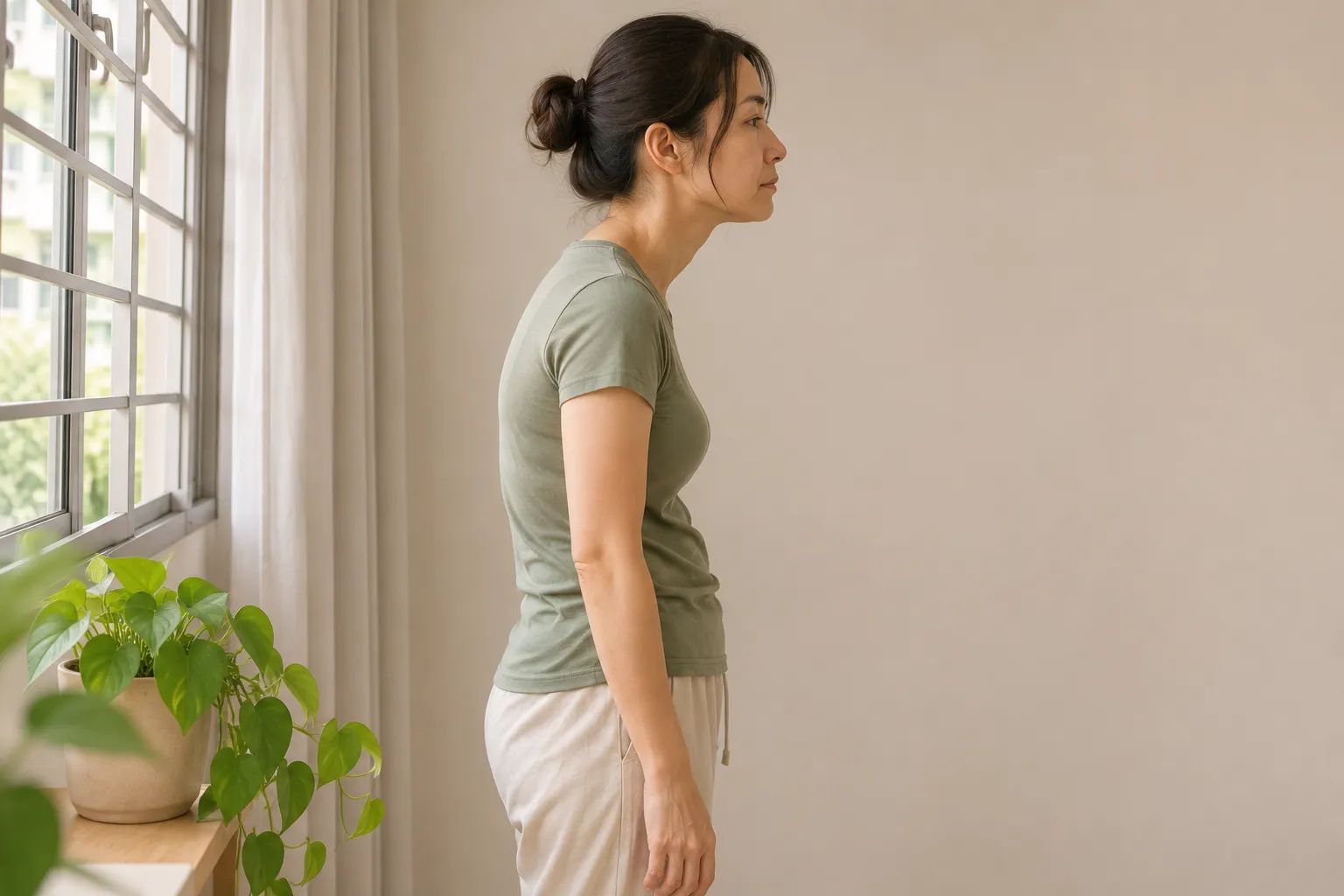
You may have caught your side view in a lift mirror or a shop window and seen rounded shoulders, with your head sitting ahead of your body. You straightened up, held it for a minute and drifted back. That drift has a cause, and finding it is the first step in how to fix hunched back posture. Telling yourself to stand tall treats the position and leaves the reason in place, which is the same gap behind why pain keeps coming back.
In short
- A hunched back usually comes from weak muscles or from a very tight back, and the two ask for different first steps.
- With weak muscles, standing straight takes effort, so you settle into a slump.
- With a tight back, standing tall feels very tight and you cannot hold it in a relaxed way.
- How a position feels, such as "I feel tight" or "I feel very stiff", is the clearest clue, and a teacher watching you can see the rest.
- Pain or numbness, or a curve that will not straighten, means a doctor comes first.
Why can't I stand up straight?
Dr. Jacqueline Yun of Inner Heal Transformation holds a PhD in Mechanical Engineering from NTU and is an E-RYT 200 yoga teacher. She meets many people in Singapore who want to correct a hunched posture, and she agrees it can change how confident they feel and how they walk. Before she suggests anything, she works out what caused it, and she sees two types.
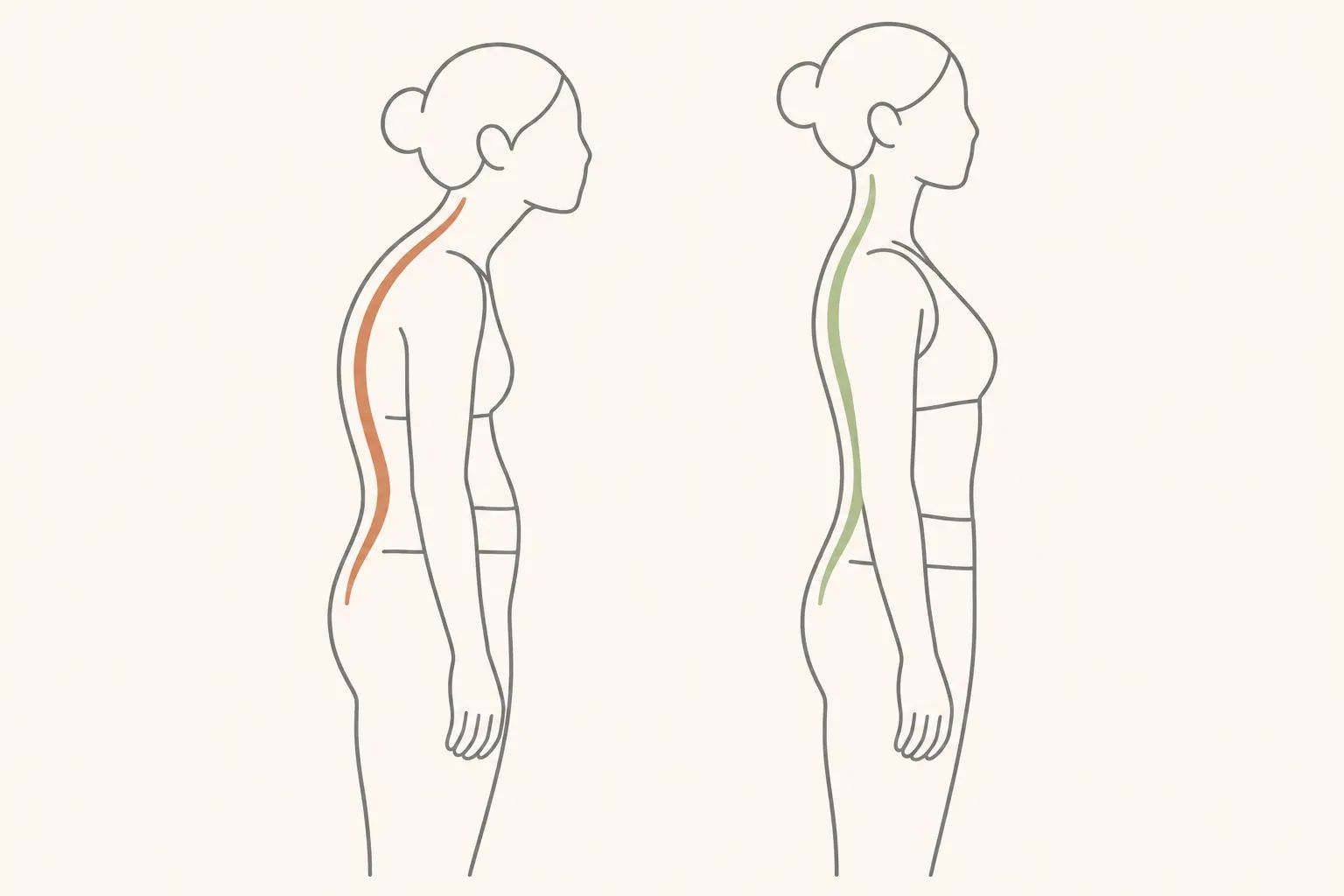
A habit-held rounded back is common. The Cleveland Clinic calls postural kyphosis the most common type of kyphosis, which usually appears in the teenage years, and explains that slouching stretches the ligaments and muscles holding the vertebrae in place. The South Tees Hospitals NHS Foundation Trust is direct about the outlook. Kyphosis caused by bad posture, it says, can be corrected by improving the posture. A rounded back like that is a shape you can change, and the first job is to learn what is holding it there.
What is the weak-muscle type of hunched back?
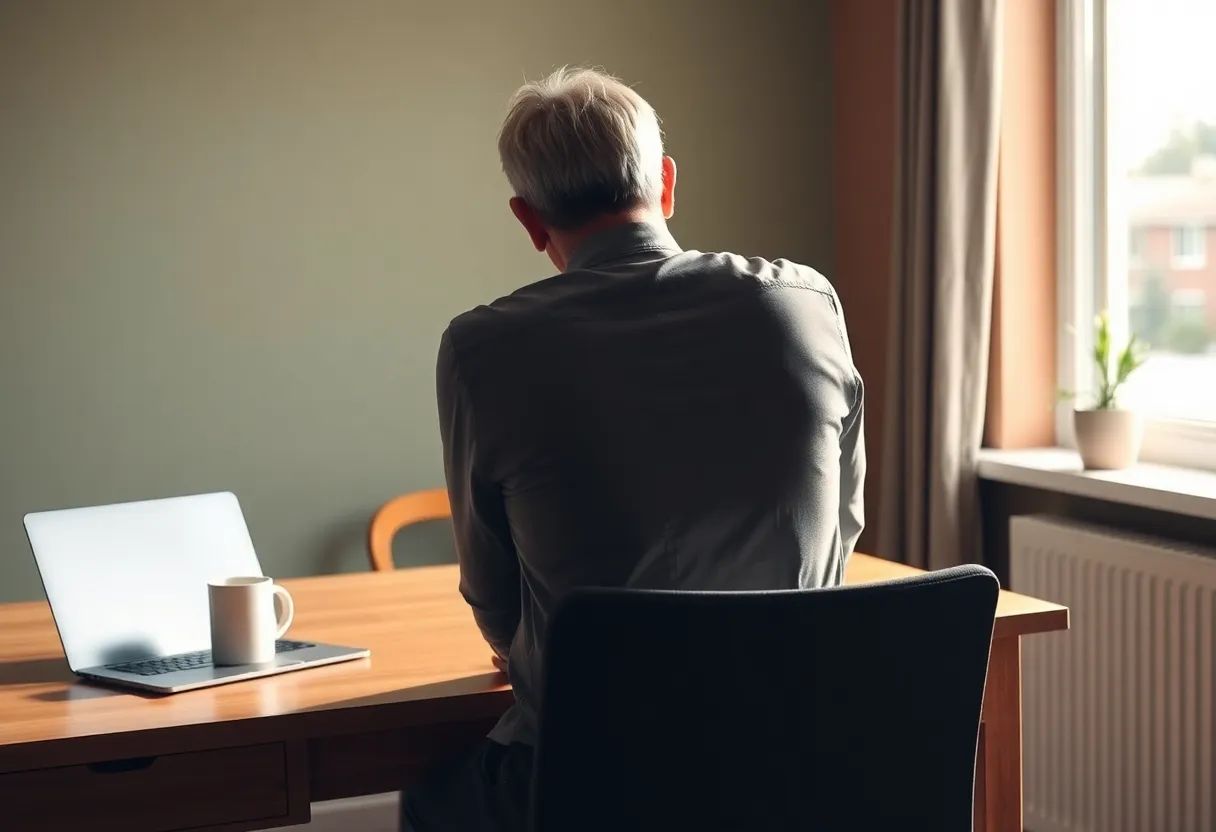
In the first type, the back muscles and the core are weak. Standing straight takes effort, so the person is reluctant to do it and stands lazily, slumped.
The best trial evidence for changing a rounded back comes from strengthening. In a randomised trial of 99 adults aged 60 to 88 with a curve of at least 40 degrees, six months of spine-strengthening and posture training, one hour three times a week, cut the curve measured on X-ray by 3.0 degrees more than monthly health classes did (95% CI 0.8 to 5.2). Self-image scores also improved more in the exercise group. The volunteers were older than most readers and the trial did not use yoga, so take it as proof that a rounded back responds to training, not as a forecast for you.
What is the tight-back type?
In the second type, the back is very tight, like a rope running along it. When this person is asked to stand up straight, it feels very tight, and they cannot hold the position in a relaxed way. It is a different problem from weakness, and it asks for a different first step.
If this sounds like you, saying "I feel tight" is a good start, because it is how Dr. Yun finds out which type you are.
How do the two types compare?
| Weak-muscle type | Tight-back type | |
|---|---|---|
| What it feels like | Standing straight is effortful, so a slump comes easily | The back is tight and stiff, like a rope along it |
| What you notice when you try to stand tall | You are reluctant to hold it and drift back to a lazy, slumped stance | It feels very tight, and you cannot hold it in a relaxed way |
| What usually helps first | Strength in the back and core, built once joint range and posture are in place | Easing the tight areas first, because joint mobility leads Dr. Yun's framework |
If you recognise a little of both columns, say so to a teacher. It is useful information.
How can I tell which type I am?
Dr. Yun tells the types apart by asking how a position feels and by watching. People answer in plain words, such as "I feel tight" or "I feel very stiff", and in an online class she can see the rest through the camera. You can try a gentle version at home, and nothing here is a diagnosis.
Stand side-on to a mirror, or prop your phone up and film yourself from the side. Stand as tall as is comfortable for about 30 seconds, then ask yourself which word came first. If it was tired, or you noticed yourself wanting to let go, that leans toward weak muscles. If it was tight or stiff, that leans toward a tight back. Stop if anything hurts or tingles.
Watch the clip back without judging it. The video shows the shape and your first word tells how it felt, which gives a teacher far more than "my posture is bad".
How do you fix hunched back posture?
Once the type is clear, Dr. Yun works in the order of her three-element framework, joint mobility first, posture correction second and muscle strength last. For people who really want to improve, she also gives extra training to do outside the online sessions.
A position held by effort alone does not last, which is the pattern in why sitting up straight never lasts. Whichever type you are, the shape you hold today is a pattern, and patterns can be retrained. The trial volunteers ranged up to 88 years old, and the group's curves still moved on average.
When should I see a doctor?
A rounded back from habit is the most common kind, and a few have another cause. Check with a doctor first if any of these apply.
- Your back has changed shape, or there is a lump or swelling. The NHS back pain guidance lists both as reasons to see a GP.
- You have pain between your shoulder blades, or pain that does not ease with rest or is worse at night. The NHS lists these too.
- You have weakness or numbness in both legs, or you lose feeling around the genitals or anus. Go to an emergency department now, and call 995 if no one can take you. Trouble with your bladder or bowels needs the same urgency. So does chest pain, or back pain that started after a serious accident.
- The curve does not straighten when you stand tall or lie flat on a firm floor. South Tees says a rounded back that cannot be straightened is more likely structural, such as Scheuermann's disease, and the Cleveland Clinic says that in Scheuermann's, changing position or posture does not change the curve.
When yoga is not enough sets out the signs that a doctor should see you before a class does. If a fixed curve is already your situation, yoga for a rounded upper back covers what yoga can and cannot change.
Can an online class help me stand straighter?
At Inner Heal, Dr. Yun corrects each person individually. She asks newcomers their goal and whether they have any pain or injury, and she gives alternatives to anyone who cannot do a pose. Because she watches through the camera, she reads your pattern instead of guessing it, and the guide to correcting posture over Zoom shows where to put the camera. Yoga is not a treatment for any medical condition.
If you would like to find out which type you are, an online class where she can watch and correct you is a quiet place to begin.
Frequently asked questions
Can a hunched back be corrected?
Often, when the rounding comes from habit. South Tees says kyphosis caused by bad posture can be corrected by improving the posture, and the 2017 trial above moved the average curve in a group aged 60 to 88. A rounded back that will not straighten is more likely structural, so have a doctor look at it before you start.
Should I stretch or strengthen a hunched back?
The research leans toward strengthening, with limits. A 2019 meta-analysis of 10 randomised trials concluded that strengthening rather than stretching could be more relevant for kyphosis. The only stretching-only study in it found no significant change, and the authors call for more trials. Pooled results are averages across groups, so they cannot tell you which suits your back.
Does a hunched back cause pain?
Not usually. The Cleveland Clinic says postural kyphosis does not usually cause pain. New pain, or pain between the shoulder blades that does not settle, is a reason to see a doctor, as above.
Can Dr. Yun tell which type I am over Zoom?
She asks how positions feel and watches through the camera. A screen has limits, and anyone in acute pain should start in person.
Sources
- NHS, Back pain, last reviewed 5 March 2026.
- Cleveland Clinic, Kyphosis, last updated October 2023.
- South Tees Hospitals NHS Foundation Trust, Kyphosis and Scheuermann's kyphosis, patient information ST0919, updated 2025.
- SCDF, Emergency Medical Services, call 995 for emergencies.
- Katzman WB et al. Targeted spine strengthening exercise and posture training program to reduce hyperkyphosis in older adults: results from the SHEAF randomized controlled trial. Osteoporosis International, 2017. PMID 28689306.
- González-Gálvez N, Gea-García GM, Marcos-Pardo PJ. Effects of exercise programs on kyphosis and lordosis angle: a systematic review and meta-analysis. PLoS One, 2019. PMID 31034509.